Guide 03
Basically, it's a sewn fabric balloon with a fan.
A commercial bounce house is engineered like a tent crossed with a trampoline. It has to take thousands of landings a day, survive sun and rain, and fold into the back of a van. That combination of requirements — strong, light, waterproof, packable — is why two materials dominate: PVC vinyl and woven fabrics.
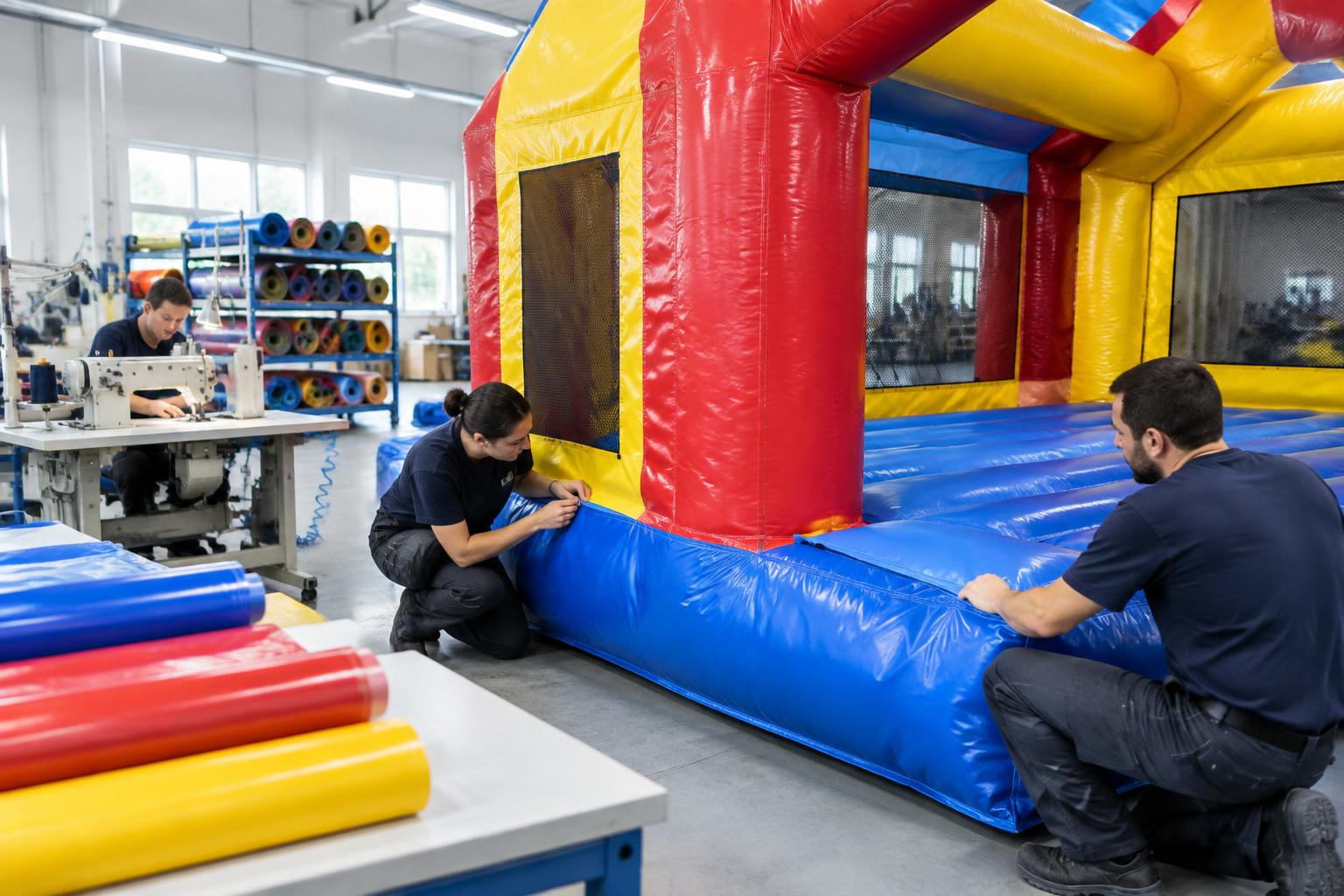
Everything is cut into panels, sewn together with heavy industrial machines, and stress-tested before it ever meets a kid. The structure only holds its shape because the blower is constantly refilling it — the house is less like a solid object and more like a very slow, very sturdy balloon.
The material list
- PVC vinyl
- The workhorse material. Commercial bounce houses use heavy vinyl-coated fabrics, commonly in the 13–22 oz per square yard range depending on the part of the unit — floors and high-wear areas get the heaviest weight. It's strong, waterproof, and cleans easily.
- Oxford / nylon fabric
- Lighter woven fabrics are used for less-stressed areas like roofs and decorative panels, and for consumer-grade units. They're lighter to carry but wear faster than vinyl.
- Mesh netting
- The windows and walls of the bounce area. Commercial mesh is strong enough to stop a child at a full run while staying see-through for supervising adults.
- Thread & stitching
- UV-resistant polyester thread with multi-row, often double or triple stitching at stress points. Good seam work is the single best indicator of a well-built unit.
- Webbing & hardware
- Nylon webbing loops, D-rings, and anchor points sewn into the base so stakes or sandbags can hold the unit down. Zippers and deflation ports let the unit vent air quickly at teardown.
- The blower
- A continuous-air electric fan, typically 1–2 horsepower, sized to the unit. It runs the entire time the house is up. Reputable blowers meet safety listings and are used with ground-fault protection outdoors.
How to spot a quality unit
Whether you're a parent at a party or an operator buying your first fleet, the same signals separate great inflatables from cheap ones:
- Heavy vinyl where it counts — press the floor and walls; commercial vinyl feels thick and stiff, not thin and stretchy.
- Multi-row stitching at every seam and reinforced patches at anchor points.
- Commercial listing on the blower, with a screened intake and a proper power cord.
- Clear weight, height, and occupant limits printed on the unit.
- A firm, even shape when inflated — soft spots or flapping panels signal worn seams.
Keep exploring
The history of bounce houses
From the 1959 Space Pillow to today's rental industry.
Read more →
Types of inflatables
Combos, water slides, obstacle courses, and more.
Read more →
Safety checklist
What to check before the kids start jumping.
Read more →
Verified badges
How we verify safety, insurance, and cleanliness.
Read more →